
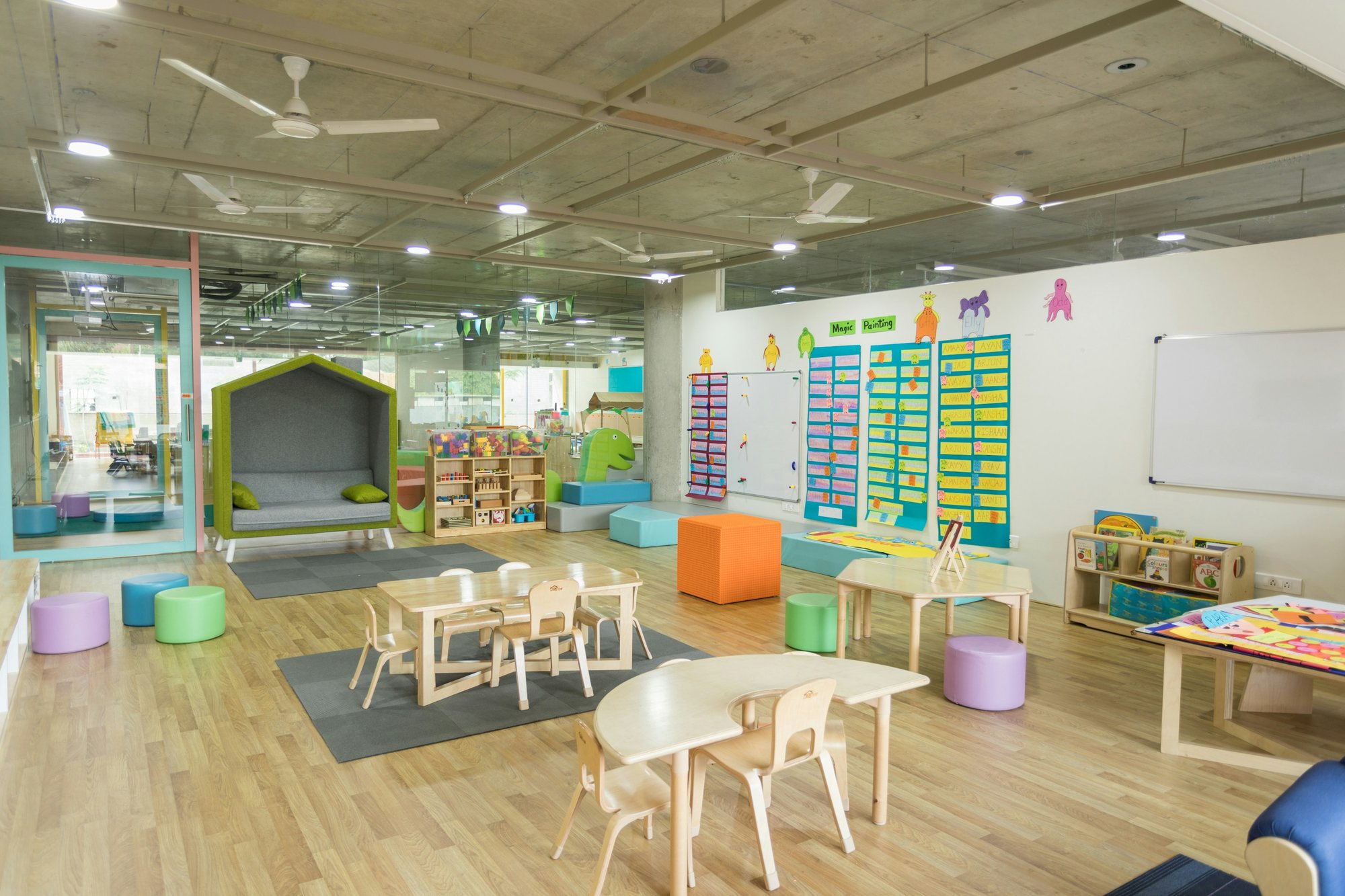
If you own a nursery, you have probably noticed the post. A letter from a group you have never heard of, asking whether you have ever thought about selling. A broker who found your number through Companies House. A nursery down the road that has quietly changed hands. It is not your imagination, and it is not luck. The UK nursery market is being consolidated, and for now it is the buyers who are doing the chasing.
I spend my days looking at this market. So let me walk you through what is actually going on, how your nursery is really valued, and why the number a buyer offers is often not the number your business is worth to them. That last part is the piece worth understanding before you reply to any of those letters.
Why the buyers are circling
Three things are happening at once, and together they have turned the nursery sector into one long acquisition queue.
The first is who owns these businesses. More than half of nursery owners are now over fifty, and more than a quarter are over sixty. A generation that built good settings over decades is looking at retirement at the same time, and most of them will sell rather than hand on. That is a lot of supply arriving over a few years.
The second is who is buying. A handful of large groups, nearly all of them backed by private equity or institutional money, are growing by acquisition. Busy Bees, the biggest, runs over 360 nurseries and turns over more than a billion pounds a year, owned by a Canadian pension fund. Kids Planet bought around forty nurseries in 2025 alone. Bright Horizons, Partou and others are all doing versions of the same thing. In 2025, groups of more than twenty settings accounted for well over half of all completed nursery deals.
The third is simple economics, and it is the part that matters most to you, so it gets its own section below.
Put those together and you have tired sellers meeting funded buyers. That is a buyer's market by nature, which is exactly why an approach needs handling with a little care.
What your nursery is actually worth
Start with the most common mistake I see. Owners value their nursery on the money that lands in their account. Buyers value it on the money it would make for someone who is not standing in the room.
A buyer does not look at your turnover. They look at your profit, and then they rebuild it. They take your earnings before interest, tax, depreciation and, importantly, rent, and they adjust it: they strip out your own salary and put back a market rate for a manager, remove one-off costs, take out a relative on the payroll who does not really work there, normalise anything unusual. What is left is the real, maintainable profit the business throws off. Sometimes that is higher than an owner expects. Often it is lower.
Then they multiply it. And the multiple, not the profit, is where the real money is decided.
The multiple is the whole story
Here is the thing nobody tells a first-time seller. The multiple a buyer applies is not a fixed number. It climbs with scale and quality.
A single, well-run nursery tends to change hands at two to three times its adjusted profit. A small regional group of three or so sites goes for four to five. A larger group with strong inspection records sells at six to seven, and the biggest portfolios command more than that.
Now follow the money. A group buying your single nursery will pay you a single-nursery multiple, say three times profit. But the moment your nursery is folded into their group, it is valued at their multiple, six or seven times. They have bought a pound of profit for three and turned it into a pound worth six. That gap is the entire reason they are calling.
It does not make them villains. It makes them smart, and it is a perfectly good deal for both sides when the price is fair. But it should tell you two things. Your nursery may be worth more than a first letter implies. And the buyer has room to move that most owners never think to ask them to use.
What actually moves your number
Within those bands, a handful of things decide where you land.
Your inspection record. This is the one that has just changed, and it catches people out. Ofsted stopped giving early years providers single-word judgements in November 2025. The old Outstanding, Good and Requires Improvement are gone, replaced by report cards that grade several areas on a five-point scale from Exceptional down to Urgent improvement, with safeguarding marked simply as met or not met. If your last inspection was before that change, your old grade sits on your record until you are re-inspected, so for a while both systems are in play. Either way the point for a buyer is unchanged. A strong record opens the whole market to you. A weak one closes it fast, because a buyer inherits your regulator along with your business.
Occupancy, and how steady it is. Most nurseries break even somewhere around sixty to seventy per cent full, so the profit lives in the places above that line. A setting running in the mid-eighties with a waiting list is worth a great deal more than one hovering near breakeven, and a lot of settings quietly sit below where their owners think they do.
Your fee mix. Government-funded hours rarely cover the true cost of a place. For 2026 to 2027 the average funded rates are around twelve pounds an hour for under-twos, under nine for two-year-olds and well under seven for three and four-year-olds, and most operators cross-subsidise those places with private fees and paid extras. A nursery in an affluent catchment with a high proportion of full-fee families and healthy extras is more profitable, and more valuable, than one leaning heavily on funded hours.
Your staffing. Wages are sixty to seventy-five per cent of a nursery's costs, so how you staff is most of how you profit. Heavy use of agency cover is the first thing I check, because it is expensive and it usually signals that permanent staff are hard to keep. Buyers read agency spend the same way.
Whether it runs without you. If you are the manager, the marketer and the face parents trust, a buyer sees risk, and risk is a discount. A settled management team that would stay after completion is one of the cheapest ways to lift your own price.
The freehold decision that changes your sale
If you own your building, you have a choice that materially changes what you walk away with.
You can sell the business and the freehold together. That is one clean transaction, a higher headline number, and a proper exit - you hand over the keys and you are done. Lenders will fund a buyer more readily against a freehold too, typically up to around seventy per cent of the going concern value, because the bricks sit behind the loan.
Or you can keep the freehold, grant the buyer a lease, and sell only the business. You get less up front, because the buyer is now paying for goodwill alone rather than goodwill plus a building. But you keep a property that pays you rent for years, and you still bank the value of the trade.
The market has moved hard toward that second route. Nearly three quarters of nursery deals in 2025 were leasehold, up from around six in ten the year before, and most of the big groups now operate almost entirely on leases. The buyers like it because it keeps their capital free for the next acquisition rather than locked in property. Plenty of sellers like it because it turns one exit into a lump sum plus an income. Neither is right or wrong. It comes down to whether you want a clean break or an ongoing return, and it is worth pricing both before you let a buyer assume one for you.
The tax you actually keep
The headline price is not what lands in your account. For most owners the gain qualifies for Business Asset Disposal Relief, which is now charged at eighteen per cent on the first million pounds of gain, with the standard twenty-four per cent above that.
It is worth knowing that this relief has quietly got dearer. It was ten per cent as recently as two years ago. That is not a reason to rush a sale, because the rate has now settled at eighteen and nothing further has been announced. But it does mean the gap between the price you agree and the money you keep is wider than it once was, and it deserves modelling before you shake on anything.
One route owners sometimes ask about is a sale to an employee ownership trust, which used to be entirely free of capital gains tax. Since November 2025 only half of the gain is relieved, so it is no longer the tax-free exit it was, though for the right owner it can still make sense. The structure of a deal can change your net proceeds more than a small movement in the headline price, which is why we bring our tax colleagues at dns in early rather than late.
If a buyer has already written to you
Then treat the letter for what it is. It means a group has looked at your nursery and decided it wants it. That is flattering, and it is also the moment you have the most leverage you will ever have, provided you do not spend it by negotiating alone.
The imbalance is the whole point. The group on the other end completes dozens of these deals a year and knows exactly what your business is worth to them, including the part of that worth they would rather you did not see. You will sell a nursery once in your life. Meeting that experience with a single unadvised conversation is how good businesses get bought for a fair price when they could have had a full one.
The fix is not complicated. Get an honest valuation before you respond. Understand which of the levers above you can still pull. Then let more than one credible buyer know you are open, quietly and on your terms, so that the number is set by competition rather than by whoever happened to write first. One buyer is a valuation. Several buyers are a price.
Where we come in
We advise nursery owners on exactly this: what the business is worth, how to lift that number in the months before a sale, how to structure the freehold, and how to run a discreet process that brings the right buyers to the table without unsettling staff or parents. We handle the tax alongside our colleagues at dns, so the money you keep is planned rather than discovered afterwards.
The best time to have that conversation is long before you are ready to sell, while there is still time to move the levers that matter. If those letters have started arriving, it is already worth a call.
This is general information, not advice. Every nursery and every owner is different, and valuations, tax treatment and deal structures should be checked against your own circumstances before you act.
Frequently asked questions
How is a day nursery valued?
On its profit, not its turnover. A buyer takes your adjusted EBITDA - the real, maintainable profit once the owner's own pay and one-off costs are stripped out and normalised - and applies a multiple to it. The multiple depends mostly on your scale, your inspection record and whether the building is freehold or leasehold. Turnover barely comes into it.
What multiple should I expect?
As a rough guide in 2026: a single site rated well tends to sell at two to three times adjusted profit; a small regional group of three or so nurseries at four to five times; a larger group with strong ratings at six to seven times, and the biggest portfolios above that. The number is not fixed. It rises with scale, quality and demand, which is exactly why a group can afford to pay you more than a first offer suggests.
My last Ofsted was a single-word grade. Does it still count now the system has changed?
Yes. Ofsted stopped giving early years providers single-word judgements in November 2025 and moved to report cards that grade several areas on a five-point scale, with safeguarding marked simply as met or not met. If your last inspection was before that change, your old grade stays on your record until you are re-inspected, so both systems are in play for a while. To a buyer the effect is the same either way: a strong record widens the pool of people who will fund and buy you, and a weak one narrows it quickly.
Should I sell my freehold or keep it?
If you own the building, you have two routes. Sell the business and the freehold together for one clean, higher headline figure. Or keep the freehold, grant the buyer a lease, and sell the business on its own - you get less up front but you keep a property that pays you rent for years. Most of the market has moved to the second route: nearly three quarters of nursery deals in 2025 were leasehold. Which is right depends on whether you want a clean exit or an ongoing income, and it is worth modelling both before you decide.
How much tax will I pay when I sell?
For most owners the gain qualifies for Business Asset Disposal Relief, which is now charged at 18 per cent on the first million pounds of gain, with the standard 24 per cent above that. That relief was 10 per cent two years ago, so the tax on selling has risen, though the rate has now settled and nothing further is announced. A sale to an employee ownership trust, once free of capital gains tax, now only relieves half the gain. The right structure can make a real difference to what you keep, so take proper advice before you agree anything.
A group has approached me directly. Should I just deal with them?
Be careful. One interested buyer is a valuation, not a price - and the group writing to you completes dozens of these deals a year while you will do it once. That imbalance is the whole game. The way to correct it is to get an honest valuation first, understand what moves your number, and let more than one credible buyer know you are open. A first offer is almost never a best offer.